How Do I Plan Entertainment for an Outdoor Mountain Wedding in Montana?
Outdoor mountain weddings in Montana are some of the most rewarding events we run, and the most demanding. Power, sound, weather, lighting, logistics — every variable you'd take for granted indoors gets stripped away. Here's how we plan entertainment for them after 500+ Montana weddings.
Last summer we ran a ceremony at a meadow about thirty minutes outside Big Sky where the only road in was a single-lane forest service track. The bride wanted her grandmother's hymn played on a string trio recording during the processional. Easy enough — except there was no power, no cell service, and the wind was already picking up by the time we got the speakers wired. We'd planned for all of it. The trio recording played clean through the vows, the wireless mic on the officiant didn't pop once, and after the kiss we transitioned right into reception sound at the lodge a half-mile down the hill. None of that happens by accident.
Outdoor mountain weddings in Montana are some of the most rewarding events we get to run. They're also the most demanding, because every variable you'd take for granted at an indoor venue — outlets, walls, climate control, predictable acoustics — gets stripped away. What's left is you, the gear, the weather, and a plan. After 500+ Montana weddings, we've got opinions about how to make the planning side easier. So here's how we'd approach it if we were planning ours.
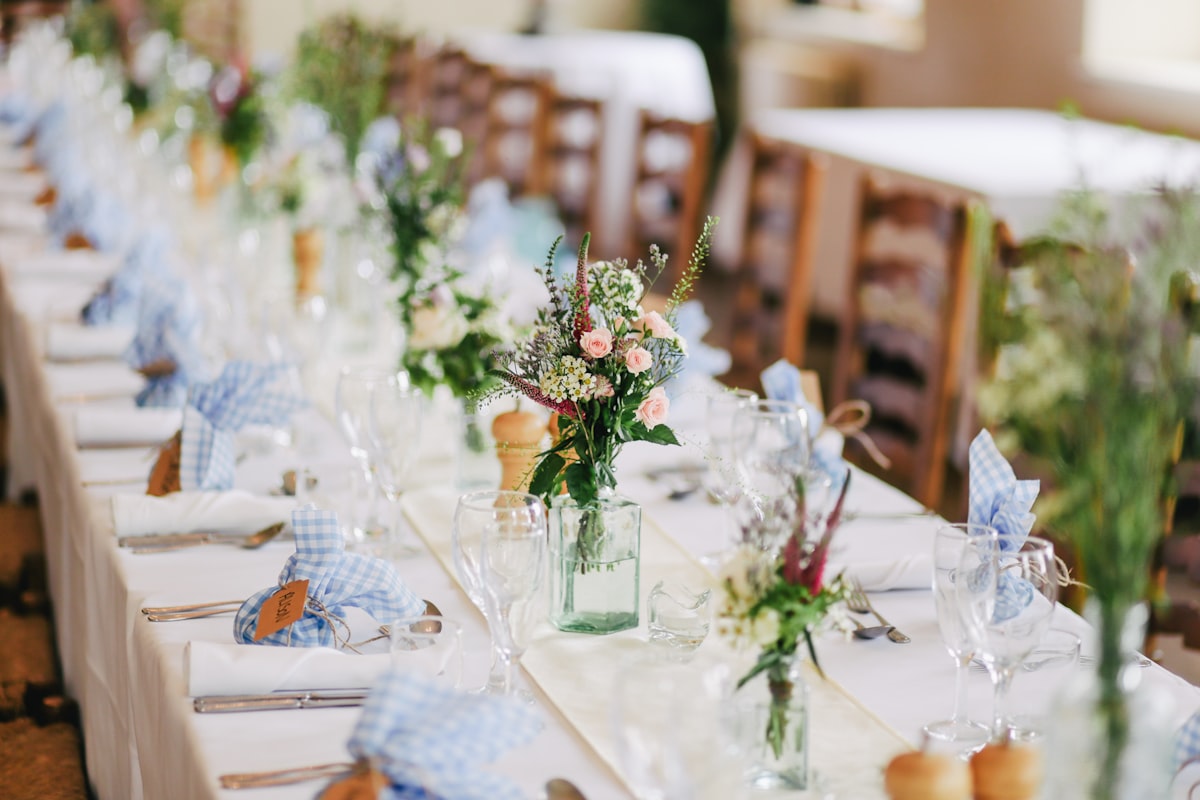
The Setting Comes First — Pick a Venue That Actually Fits Your Plan
A lot of couples fall in love with a photo of a meadow or a ridgeline and book it before asking the practical questions. We get it — Montana's landscape sells itself. But the venue is going to dictate every entertainment decision you make from here on out, and some sites are dramatically easier to work than others.
The big questions to ask before signing a venue contract: Is there grid power? If yes, how many circuits, where are the panels, and what's the amp draw available to vendors? If no, can a generator be brought in, and is there a flat spot to put it where the noise won't drown out the ceremony? What's the load-in like — pavement, gravel, or a 200-yard hike across grass with a hand cart? Is there any kind of cover available if the weather goes sideways, or do you need to add a tent to the budget?
We've worked sites where a barn outside Whitefish had no power outlets, a gravel parking lot, and a 200-yard carry from the truck to the setup area. Took three trips with a hand cart to get the gear in. That's part of the deal at remote venues, but it changes the timeline assumptions. Instead of a 90-minute setup, you're looking at three or four hours minimum. Good vendors will tell you this upfront. The ones who don't are about to learn the hard way at your wedding.
Compare that to a site like a barn venue with built-in power and a paved load-in lane. Same rustic look in the photos, completely different planning equation behind the scenes.
Power Is the Whole Game at Mountain Venues
If we had to pick the single most underestimated factor in mountain wedding planning, it would be electrical. Not because power is hard to provide — generators exist, batteries exist, professional DJs bring their own contingencies. The problem is that couples assume the venue has it figured out, and venues assume the DJ has it figured out, and nobody actually walks the site to confirm.
A real example: remote Montana venue, no grid power, everything running off a generator the venue rented. Ten minutes before the ceremony, it wouldn't turn over. We had 150 guests sitting in white folding chairs and a bride waiting in a cabin. We troubleshot on the spot and got it running with about two minutes to spare. Now we always bring a backup portable unit, even when the venue says they've got it covered. Generators fail. They run out of fuel, they flood, they get hot and trip out. If your entertainment depends on one source of power, you don't have a plan — you have a hope.
For a mountain venue, we typically run a primary line off the main power source (grid or generator) and keep battery-powered backup speakers staged for the ceremony specifically. The ceremony is the part you cannot redo. If the reception music drops for thirty seconds, nobody remembers. If the bride walks down the aisle in silence because a breaker tripped, that's the story everyone tells.
Sound at Altitude Behaves Differently Than You'd Think
Most couples don't realize how much sound gets eaten by open air. Inside a barn or lodge, the walls reflect everything back — your speakers do half the work, the room does the other half. Set the same speakers up in a meadow at 5,000 feet and the sound just dissipates. There's nothing for it to bounce off. Wind makes it worse, especially if you're trying to project across an open ceremony space.
This means you need bigger sound systems for outdoor mountain venues than people expect. Not louder — wider. The goal is even coverage so the back row hears the vows the same as the front row. We typically run a small line array or paired full-range tops on stands for any outdoor ceremony with more than 80 guests, plus a powered subwoofer for reception music. That's about double what you'd need indoors for the same headcount.
Wireless microphone selection matters too. Cheap consumer wireless mics use frequency bands that are now jammed with cellular interference. We use professional UHF systems with frequency coordination, and we still scan the spectrum when we arrive at a new site to make sure nothing's stepping on us. At a venue near Polson last fall, we picked up interference from a nearby ranch's irrigation telemetry on the first frequency we tried. Took two minutes to switch. That's the kind of small thing that wrecks a ceremony if your DJ doesn't know what they're doing.
Weather Will Try Your Patience — Have a Plan B (and a Plan C)
Montana weather is a character in every outdoor wedding story we tell. We've had blue skies turn into golf-ball hail in the time it takes to set up a sound check. We had an outdoor ceremony at Big Sky Resort where the wind picked up to over 30 mph right as the bride started down the aisle — speaker stands rocking, hair flying. We'd sandbagged the bases that morning because we know how Big Sky behaves in the afternoon. The couple next to us, different vendor, had their arch blow over.
The real planning work isn't predicting the weather. It's having a fast pivot when the weather changes. That means a backup indoor space, agreed on with the venue in advance, with a known transition plan. It means knowing how long it takes to break down outdoor sound and rebuild it inside (we plan for 45 minutes minimum). It means tying down everything that can blow over — speaker stands, lighting trees, gear cases, even cocktail tables.
The hailstorm wedding I mentioned: outdoor ceremony, blue skies, then hail out of nowhere. We covered the gear in three minutes, helped move guests inside, and the couple did their vows in the lodge lobby. They told us afterward it felt more intimate. You can't control the weather. You can control how fast you adapt to it.
If you're working through your own backup plan, our deeper write-up on handling sound at remote Montana venues covers the gear-side of the equation in more detail.
Lighting Outdoors Is About When the Sun Drops, Not Just Where the Lights Go
One thing we'll push back on: a lot of "Montana wedding inspiration" content shows daylight ceremonies and assumes lighting is just for vibe. At elevation, especially in summer, the sun behaves differently than couples expect. Twilight starts earlier behind a mountain than it does on flat ground, and once the light drops, it drops fast. We've seen receptions go from gorgeous golden hour to flashlight-pulling-out-of-purses in about 20 minutes.
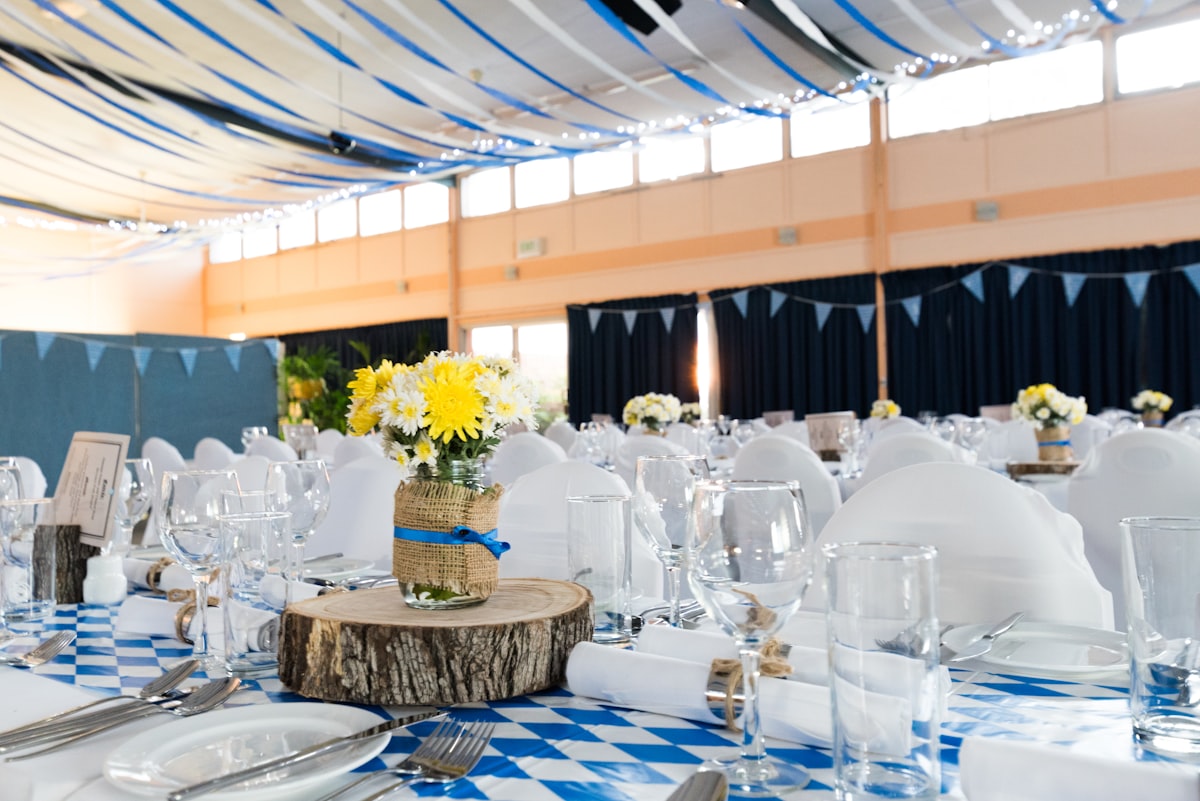
Plan your lighting for two scenarios. First, what does the space need at sunset for the dance floor and walking paths to actually function? String lights overhead, even simple bistro bulbs, transform a tent or a barn from a black hole into a usable space. Second, what's the mood lighting that makes the photos look good and the room feel like a party? Uplighting in warm amber tones along the perimeter is our go-to. About 70% of our couples end up adding it to their package because once they see what it does to a barn or lodge interior, the math is obvious.
If your venue is fully outdoor with no overhead structure, you'll need lighting trees or pole-mounted fixtures, plus battery-powered options for any spot that doesn't have power access. Don't assume the venue's "ambient" lighting is enough. We've shown up to "lit" mountain venues that turned out to mean three solar lanterns and the moon.
The Logistics Most Couples Don't Think About
This is the section nobody writes blog posts about, but it'll make or break your day. Cell service: a venue in the Swan Valley we worked had zero bars. We couldn't stream music from cloud playlists, couldn't receive last-minute song requests by text, couldn't even check the weather radar. Everything had to be pre-loaded locally on multiple devices. If your DJ tells you they "stream from Spotify," ask them what happens when the wifi drops or there's no signal. The honest answer is: their setup will fail.
Heat is the other one. Peak summer mountain wedding, 100+ degrees in direct sun, our iPad running the music library overheated and shut itself off mid-set. The laptop was next, thermal throttling and skipping tracks. Now we bring shade canopies specifically for the DJ booth and gear, plus backup devices that can take over if the primary cooks. Heat is as big a threat to outdoor entertainment as rain is.
And then there's wildlife. We've had a bear walk up to a reception tent during dinner — a real one, fully grown, very interested in the smell of brisket. Venue staff handled it, the bear moved on, but the energy in the room shifted. We actually played The Bare Necessities when we kicked off the dancing and got the room laughing again. Bees are more common; we got stung multiple times at one outdoor setup walking through a ground nest with our hands full of cables. Wildlife is part of the package out here.
Build the Timeline Around the Mountain, Not the Other Way Around
Most wedding planning blogs tell you to make a detailed reception timeline and stick to it. We think that's overrated for Montana mountain weddings. Things move differently out here. Sunset shifts your golden hour photos by 45 minutes if a storm rolls through. Guests take longer to gather because the parking is a quarter-mile away. The first dance happens when the bride and groom are ready, not when the timeline says.
What we plan for instead: anchored milestones. The ceremony starts at a fixed time because the officiant has another booking. Dinner happens within a window because the caterer is feeding 150 people on a deadline. Everything else flexes. We've MC'd receptions where dinner ran 40 minutes long, and we just absorbed the time into the dancing block — kept the energy moving, didn't try to force the cake cutting at 8:14 pm because that's what the spreadsheet said.
For mountain venues specifically, we recommend building 30 extra minutes of buffer into every transition. Cocktail hour to dinner. Dinner to first dance. Last dance to send-off. Things take longer when you're moving guests across uneven ground or up a hill in heels. A timeline that works at a downtown banquet hall will frustrate everyone at a meadow venue near Red Lodge.
What to Ask Your Entertainment Provider Before You Sign
Most of the entertainment-related disasters at outdoor mountain weddings come from couples hiring a DJ who has only ever worked indoor venues. The job is fundamentally different. Ask any vendor you're considering: have you worked outdoor Montana mountain venues before? How many? Which ones?
Then dig into the practical stuff. What's their backup gear situation? Do they bring their own generator if the venue can't supply power? What's their plan if a primary speaker fails mid-reception? How do they handle wind protection for mics? Are they comfortable working without cell service? If the answers are vague, that's your sign to keep looking.
One more piece of advice: ask for real wedding stories. Not "what's your favorite wedding?" — that's a softball. Ask "tell me about a time something went wrong." A vendor who's worked enough outdoor weddings will have stories ready (and probably enjoy telling them). A vendor who can't think of one has either never had a problem (unlikely) or hasn't worked enough events to know what can go wrong.
If you want to talk through what your specific mountain venue needs — power, sound, lighting, backup plans, the works — we do free planning calls before you book. Take a look at our packages and pricing to see what's included, or jump straight to the contact form and we'll get back to you within a day. We've worked enough mountain venues across Montana to spot what's going to be a problem before it becomes one.
Montana Wedding Entertainment — wedding DJ, MC, lighting and photo booth across Montana. Call 406-396-8499 or get an instant quote.