What Sound System Do I Need for an Outdoor Wedding Ceremony?
Speakers are the easy part. A Montana wedding DJ on the PA, microphones, power, and weather planning that actually make an outdoor ceremony heard.
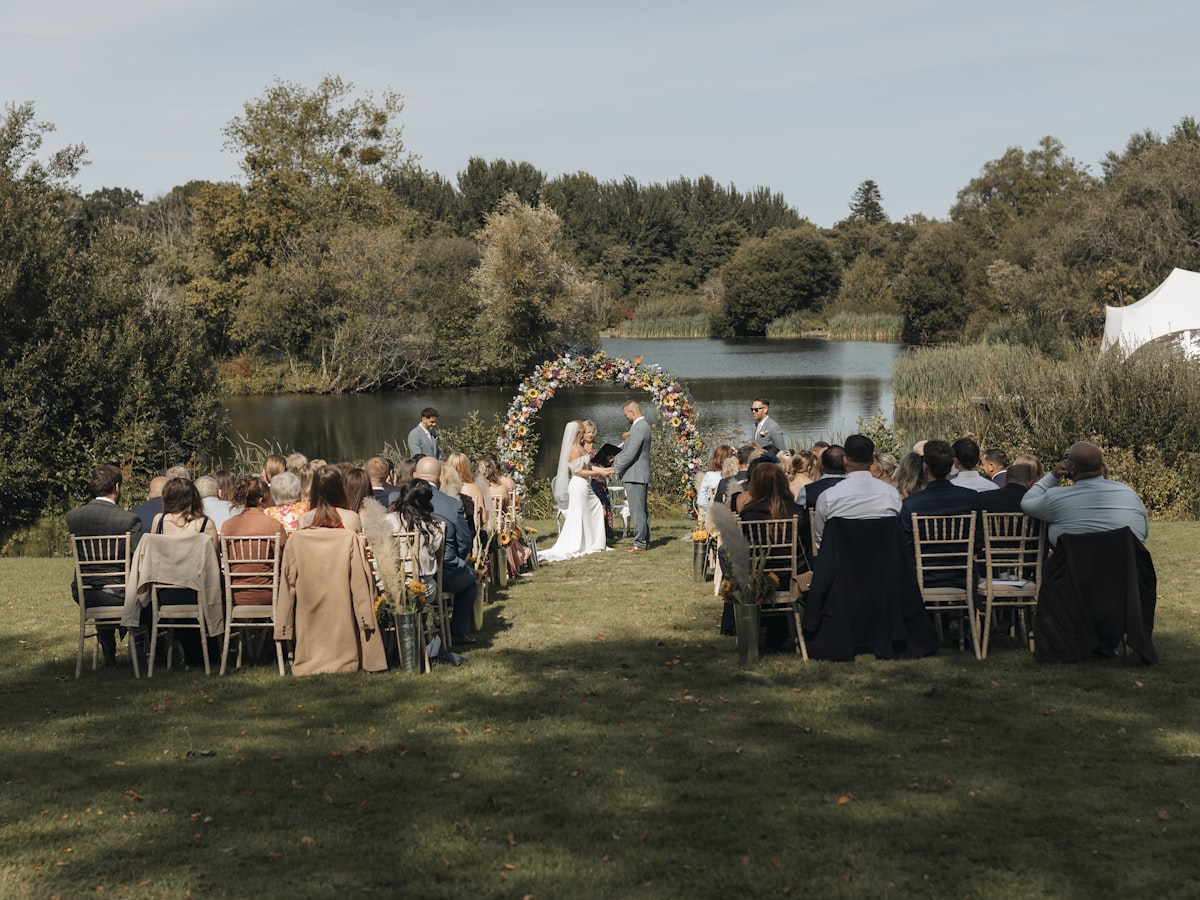
A few summers back we set up for a ceremony on a ridge above Big Sky. Blue sky, no wind in the forecast, a hundred and forty guests in white folding chairs. We sandbagged the speaker stands that morning anyway — because we've done enough Montana weddings to know the forecast is a suggestion, not a promise. Good thing. Right as the bride stepped out, the wind came up over the ridge at thirty-plus miles an hour. Our stands rocked but held. The couple set up next to us, a different vendor, watched their ceremony arch tip right over into the aisle.
That's the thing nobody tells you about outdoor ceremony sound. It isn't really about the speakers. It's about everything trying to defeat the speakers.
So when couples ask us what sound system they need for an outdoor wedding ceremony, the honest answer is layered. You need the right gear, sure. But you also need it set up by someone who's thought about the wind, the power, the dead cell zones, and the two hundred yards of grass between the parking lot and the spot where you'll actually say your vows. Let's get into all of it.
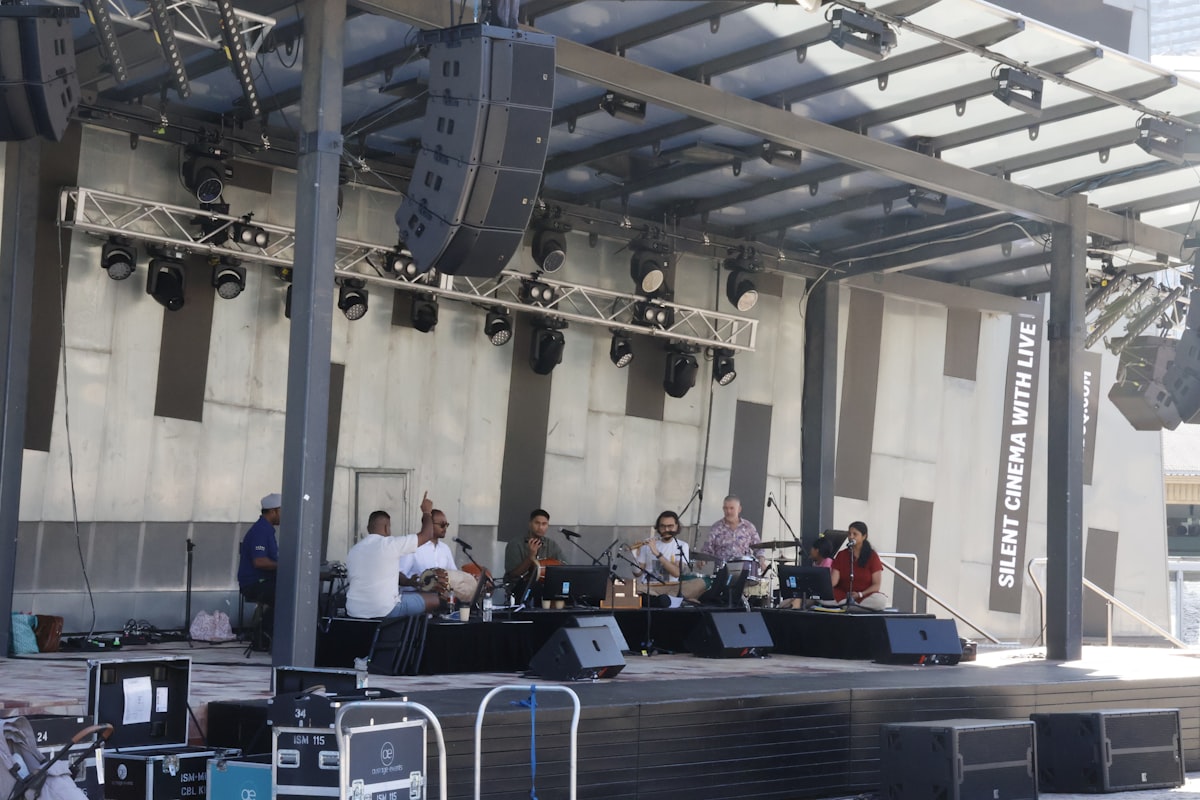
Why an Outdoor Ceremony Is Harder on Sound Than You'd Think
Indoors, walls do half the work for you. Sound bounces, fills the room, finds people's ears whether you aim it at them or not. Outside, there's nothing to bounce off. Your sound goes up, out, and gone. A speaker that fills a chapel will sound thin and distant in an open meadow with the same settings.
Then add the competition. Wind across a microphone is a roar. A river fifty feet away — and a lot of Montana ceremonies happen near water — adds a constant wash of white noise that eats vows alive. Birds, a generator humming somewhere, the highway, a tractor two fields over. None of that exists in your venue's indoor backup room. All of it is fighting your officiant for the same airspace.
Here's our blunt take: most couples wildly underestimate how much volume and clarity an outdoor ceremony actually needs. They picture a quiet, intimate moment and assume a small speaker covers it. Then Grandma in row four can't hear the vows, and the photos of her leaning forward with a confused look on her face end up in the album forever. Outdoor sound has to be deliberate, or it doesn't work.
The Real Answer: A Powered PA, Not a Bluetooth Speaker
Let's kill the obvious wrong answer first. A portable Bluetooth speaker — even a nice loud one — is not a ceremony sound system. It can't take a real microphone, the battery and volume aren't built for a hundred-plus people in open air, and the audio drops out the second someone's phone wanders too far or a text comes in. We've watched DIY ceremonies fall apart over exactly this.
What you actually want is a powered PA system. In plain terms: one or two active loudspeakers (the amplifier's built into the speaker), up on stands at roughly head height or a little above, fed by a small mixer that your microphones plug into. For a ceremony of up to about a hundred and fifty guests, a pair of solid 12-inch or 15-inch powered speakers handles it with room to spare. Smaller crowd, more intimate spot? A single speaker and a compact battery-powered system can be plenty.
The mixer matters more than people realize. It's what lets us blend the officiant's mic, a lapel on the groom, and the processional music all at once, and ride those levels live so the music ducks under when someone speaks. That live mixing is most of the job during a ceremony. You don't notice it when it's done well, which is sort of the point.
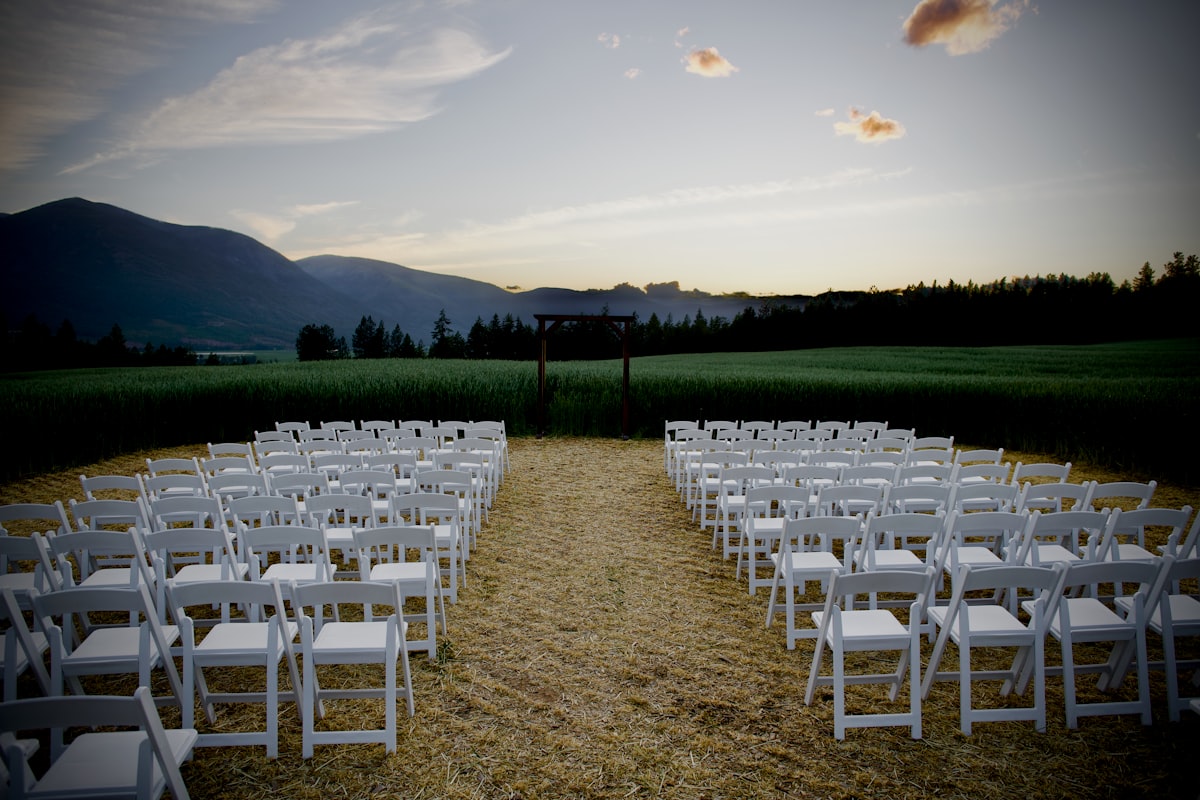
How Many Speakers, and Where They Go
One speaker can work for a small, narrow setup. But for most ceremonies we run two, placed at the front on either side of the aisle, angled slightly inward and back toward the guests. The goal is even coverage — front row and back row hearing roughly the same thing — without blasting the couple's ears off at the altar.
A mistake we see all the time at DIY ceremonies: speakers set on the ground or on a table. Sound at ankle height gets absorbed by the first row of bodies and never reaches the back. Speakers belong on stands, lifted above the crowd, so the sound carries over heads. It's a small thing that makes a giant difference.
If your ceremony and reception are in different spots — a hilltop vow exchange and then a barn down the hill, say — that's two separate setups, or one system we tear down and move during cocktail hour. Worth knowing when you're budgeting, because it's more gear and more labor than a single fixed setup. We get into this more in our guide on planning entertainment for an outdoor mountain wedding.
Microphones Are Where Most Outdoor Ceremonies Fall Apart
You can have perfect speakers and still lose the whole ceremony at the microphone. This is the single most overlooked piece, and it's where the outdoors really punishes you.
A handheld mic on a stand works for the officiant, but it has to have a good windscreen, and even then a stiff gust will cause problems. For the couple's vows, we almost always go with a lavalier — a tiny clip-on mic, usually pinned discreetly on the groom — so both people are picked up without a mic stand wedged between them in every photo. Wireless lavs keep the aisle clean and the audio close to the mouth, which is exactly what you want when the wind's trying to steal every word.
We wrote a whole separate piece on this because it comes up so often — whether wireless microphones are necessary for outdoor ceremonies. Short version: outdoors, yes, basically always. The freedom of movement and the lack of a tripping-hazard cable across the aisle are worth it on their own.
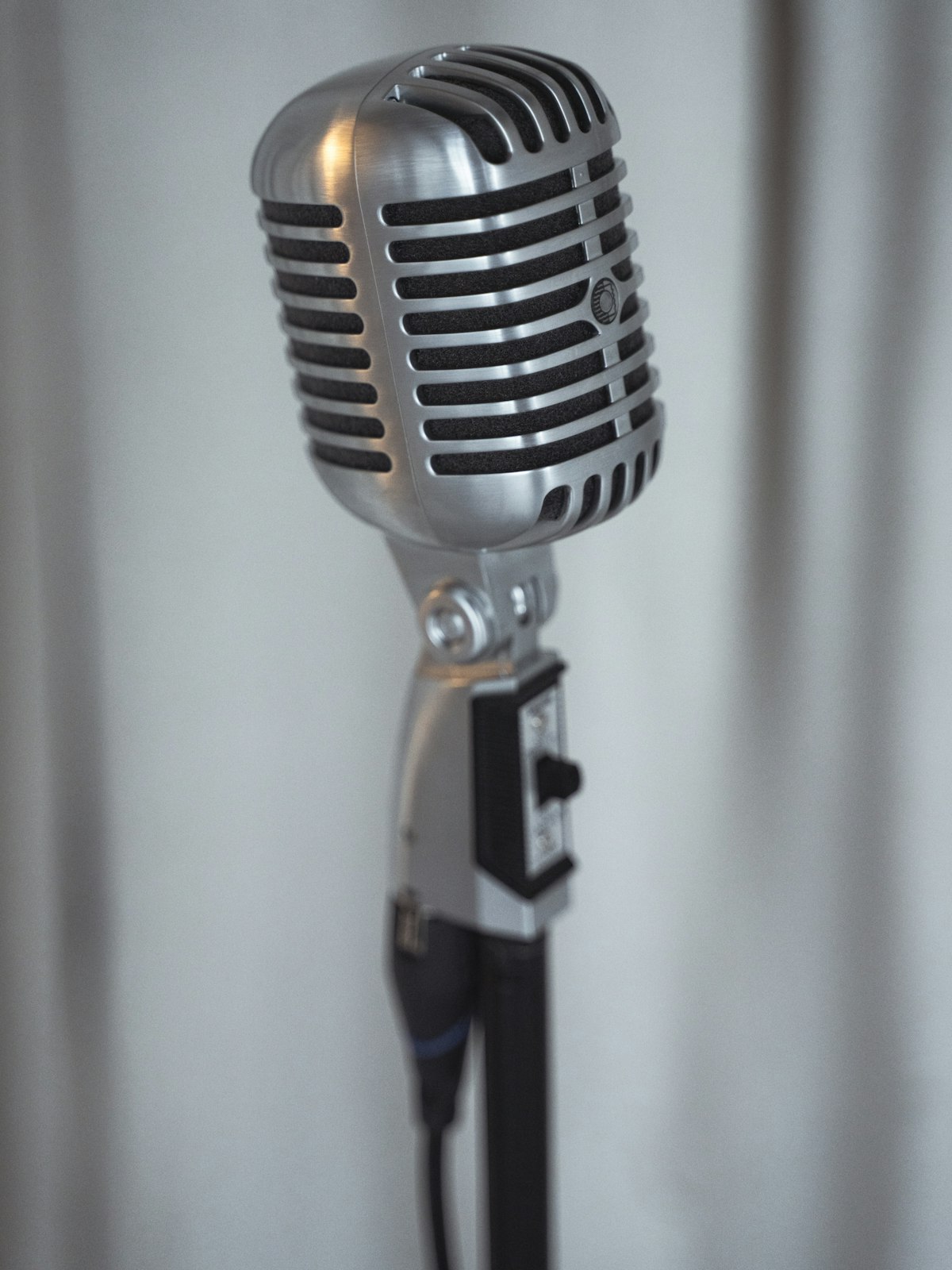
One more thing on mics: bring backups. Wireless systems can get interference, batteries die at the worst moment, a lav can come unclipped. We carry spare mics and spare batteries to every single ceremony, and we've needed them more than once. A backup handheld in the bag has saved a few "I do" moments that would otherwise have gone out to silence.
Power: The Question Nobody Asks Until It's Too Late
Here's where Montana gets interesting. A huge number of the prettiest ceremony spots in this state have no power. A meadow. A ridgeline. A spot down by the lake that you reach on a gravel two-track. Gorgeous, and completely off the grid.
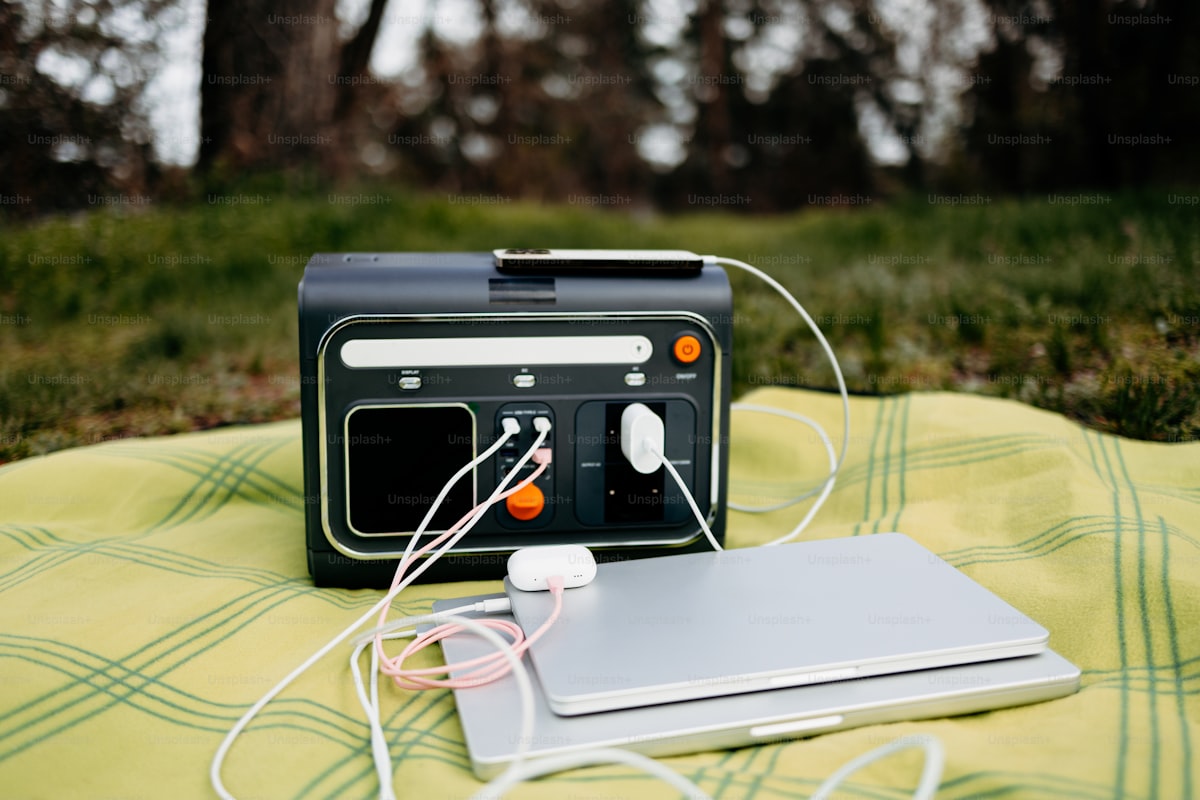
So before anyone talks about speakers, the real first question is: where's the electricity coming from? There are three answers, in order of how much we love them. Real outlets within a reasonable cable run — great, easy. A generator — works, but it has to be the quiet inverter kind and parked far enough away that you don't hear it during the vows. Or battery-powered gear — our favorite for remote ceremonies, because there's no hum, no fuel, and no cord to trip over.
We bring battery-powered PA systems specifically for these off-grid Montana spots, and they've covered ceremonies of well over a hundred people without breaking a sweat. But it has to be planned. You can't show up to a meadow ceremony with gear that needs a wall outlet and figure it out at four o'clock with guests arriving.
And generators have their own drama. We did a remote venue once where everything ran off a generator the venue provided. Ten minutes before the ceremony it wouldn't turn over. A hundred and fifty people were finding their seats while we troubleshot a dead generator. We got it running with about two minutes to spare — and now we never count on someone else's power without bringing our own backup. If your ceremony is anywhere remote, ask hard questions about power early. We cover the full picture in our deep dive on ensuring adequate sound at a remote Montana venue.
Don't Forget the Music — and the Internet You Probably Don't Have
Your ceremony sound system isn't only for talking. It's running the prelude as guests arrive, the processional as the wedding party walks, the big moment when the doors open and the bride steps out, and the recessional when it's all official. Those cues have to hit at the exact right second, and they have to fade and swell smoothly, not cut off mid-note.
This is also where a lot of DIY playlists die. We worked a venue out in the Swan Valley with zero cell service — not one bar, anywhere on the property. Any plan that involved streaming music from the cloud was dead on arrival. Everything had to be loaded locally on more than one device. We'd learned that lesson the hard way at a different remote venue years before, and now nothing we play depends on a signal. If you're planning to run your own ceremony music off Spotify, find out whether your venue even has service. A lot of the best Montana spots don't.
The music cues also change the whole feel of a ceremony when they're timed right. We did a ranch wedding where the bride arrived in a horse-drawn buggy. Coordinating the music to a horse's pace instead of a normal walking entrance is a different beast — you're watching the buggy crest the hill and riding the track so the swell lands as she steps down. When it works, the whole crowd feels it before they see her. That kind of timing is the difference between a playlist and a ceremony.
Wind, Heat, and the Other Montana Variables
We've already talked about wind, but it's worth saying plainly: wind is the number one enemy of outdoor ceremony sound in this state. It rocks speaker stands, it roars across microphones, and it scatters sound sideways. Sandbagged or weighted stands, windscreens on every mic, and a setup that accounts for the prevailing direction — that's not optional out here, it's the baseline.
Heat is the sneaky one. We did a ceremony in the middle of a hundred-degree stretch where the iPad running our music library overheated and just shut itself off mid-set. The laptop started thermal-throttling and skipping tracks. Now we bring shade for the gear and pre-load backup devices, because in July the sun can cook your electronics as fast as rain can short them out.
And then there's the stuff you genuinely can't plan for. A hailstorm that comes out of a clear sky and gives you three minutes to cover the gear and move everyone inside. A ground nest of bees right where the PA needs to go — yes, that happened, and yes, we got stung finishing the setup. Montana weddings come with the wild attached. A pro doesn't panic at any of it; we just have a plan and a backup for the plan. If weather's on your mind, our piece on how weather conditions affect outdoor wedding sound systems goes deeper.
Can I Just Rent a Speaker and Do This Myself?
You can. People do. And some of them get lucky with a calm day and a small crowd. But the failure modes are brutal, and they all happen live, in front of everyone, with no second take. A dead battery during the vows. A mic that screams feedback because nobody knew where to point the speakers. Music that won't load because there's no signal. A speaker on the ground that the back three rows never hear.
The value of hiring a pro for ceremony sound isn't really the equipment, even though ours is better than what you'll rent. It's the judgment. It's knowing to sandbag the stands before a forecast says you need to, to load music locally before you find out there's no cell service, to bring a backup mic before the first one fails. It's someone watching the levels in real time so the officiant is always clear and the music always lands. We've done over five hundred Montana weddings, and most of what we bring to a ceremony is the five hundred things that went sideways at the earlier ones.
If you want a sense of everything a pro actually handles beyond the music itself, we broke it down in what a wedding DJ actually does. Ceremony sound is a big, quiet part of it.
What We Bring to a Montana Outdoor Ceremony
Every MWE ceremony setup includes professional powered speakers on stands, a mixer for live level control, wired and wireless microphone options including lavaliers for the couple, and battery power for off-grid spots so we're never tied to an outlet. We pre-load all music locally, carry backup mics, batteries, and devices, and we weight everything down because we've watched the wind win too many times to gamble. Ceremony sound coverage is available as an add-on to any of our packages, or built into our full-wedding options.
If you're getting married somewhere beautiful and slightly off the beaten path — which, in Montana, is most of the good spots — let's talk through your specific site before the day. Where the power is, where the wind comes from, how far the carry is. The ceremony is the part of the day everyone actually came to witness. It deserves sound that lets every guest hear it. Take a look at our packages and pricing, and reach out — we'd love to hear about your wedding.
Montana Wedding Entertainment — wedding DJ, MC, lighting and photo booth across Montana. Call 406-396-8499 or get an instant quote.